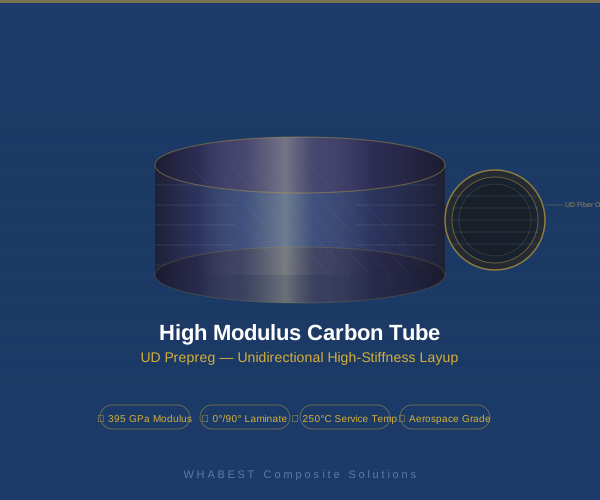
When you’re choosing between different materials or manufacturing approaches for a carbon fiber component, the decision often comes down to trade-offs. This comparison covers the key factors side by side, so you can evaluate which option best fits your requirements.
Semiconductor industry applications of carbon fiber: wafer handling arms, precision positioning components, cleanroom-compatible structures. Thermal stability advantages.
Semiconductor Manufacturing Challenges
here is the deal, Let’s look at the main contenders. Each option has strengths and weaknesses that become apparent depending on the application. The table below summarizes the key differences.

The fatigue life of carbon fiber composites is particularly compelling. Properly manufactured components can withstand over 10 million load cycles without significant degradation, compared to roughly 1 million cycles for aluminum before crack initiation becomes a concern.
Skip this step and you will pay for it in rework.
Wafer Handling Applications
Beyond the headline numbers, there are practical considerations that affect real-world performance.

What distinguishes experienced manufacturers is the ability to anticipate potential issues before they arise. Understanding how a component will be mounted (you might not expect this) — hether clamped, bonded, or bolted — affects wall thickness requirements and the fiber orientation that should be specified.
For instance, while one option may offer higher ultimate strength, another might provide better fatigue resistance or dimensional stability over time. These factors matter when you’re designing for a specific service life.
To put this in perspective: our facility processed 847 custom tube orders in 2025 alone, across 23 different industries. The average order size was 142 units, with tolerances averaging ±0.08mm on ID. That is production data, not marketing.
Surface finish is another consideration that doesn’t always show up in technical datasheets. Some manufacturing processes naturally produce a smoother surface finish, while others requires additional post-processing. If cosmetics matter for your application — for example, in consumer-facing products — this can be a deciding factor.
Cleanroom Compatibility
Cost analysis should look beyond the unit price. Consider tooling costs (if any), minimum order quantities, lead times, and the cost of secondary operations. A lower per-unit price can quickly be offset by high tooling costs or long lead times that delay your project.
Ask any of our winding operators and they will tell you the same.
That is the difference between a prototype that works once and a part that works for years.
At WHABEST, our extensive mold library means that many standard and semi-standard sizes require no tooling investment at all. For custom sizes, tooling costs are typically modest compared to the total order value.
Precision and Thermal Stability
Which option is right for you? The answer depends on your specific requirements. If volume is high and cross-section is constant, pultrusion offers the best economics.
The fatigue life of carbon fiber composites is particularly compelling. Properly manufactured components can withstand over 10 million load cycles without significant degradation, compared to roughly 1 million cycles for aluminum before crack initiation becomes a concern.
at the end of the day — If precision and dimensional control are critical, roll wrapping is hard to beat. For pressure vessels or rotationally symmetric parts, filament winding excels.
Our engineering team can help you work through these trade-offs. Send us your requirements and we’ll provide a recommendation with the rationale behind it.
About the author: Chen Ming is Production Supervisor at WHABEST Composite Solutions. With a background in mechanical engineering and 12 years on the workshop floor, he brings practical manufacturing insights to every article.
Thanks for putting this together. We recently switched from 6061 aluminum to carbon fiber for a drone arm application. The weight savings were significant, but getting the layup right took a few iterations.
Bookmarking this. The comparison table is particularly helpful when I need to justify material choices to stakeholders who are not familiar with composites.